
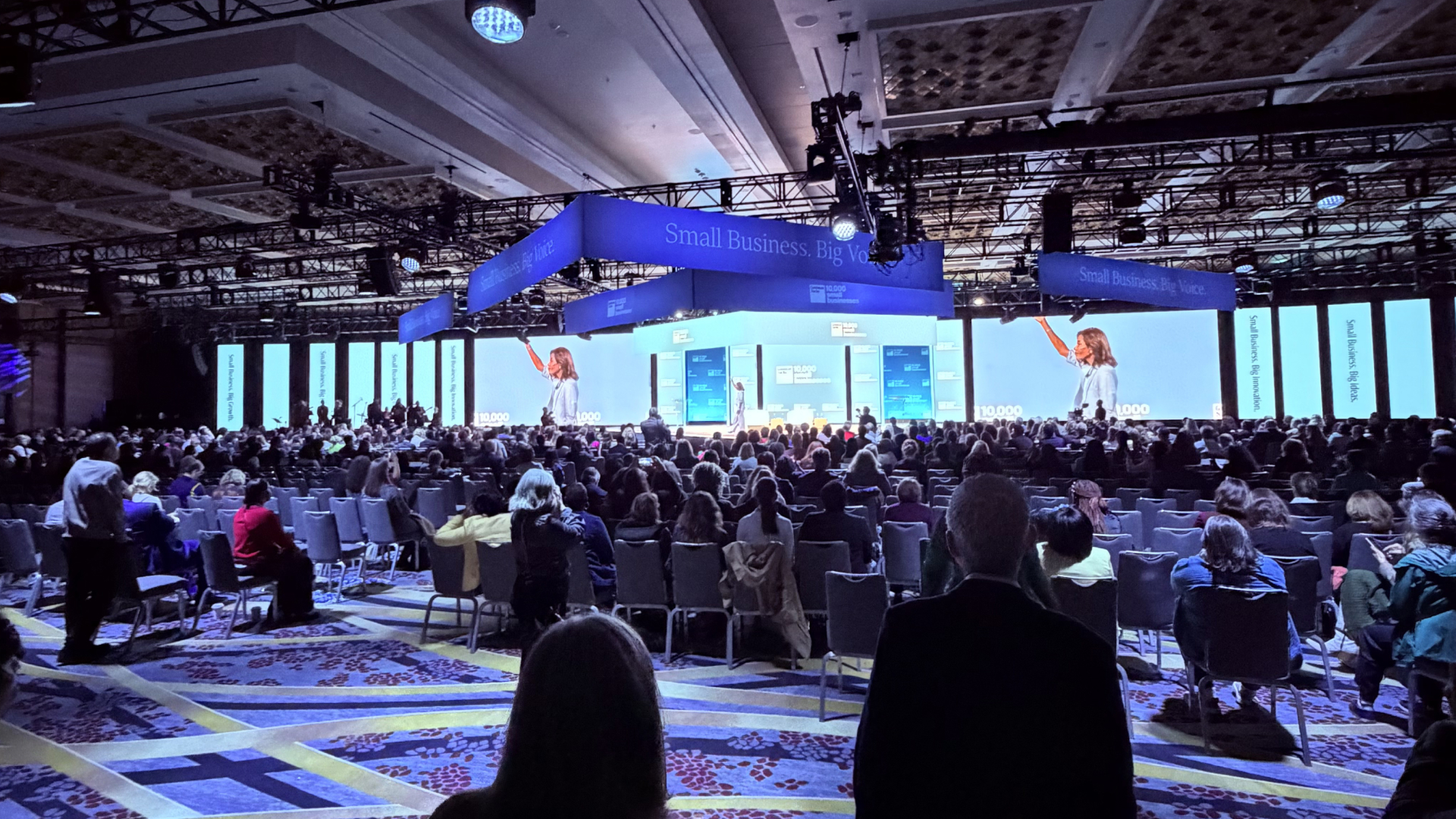
This post summarizes key insights from Dr. Ethan Molick]’s talk at the 10KSB Summit titled "AI: The New Frontier."
Originally given on Thu Oct 30, 2025 5:10 PM, this post includes notes and a few practical ways we’re already applying those ideas in our own work.
We hope you find this to be a useful summary you can referenc or share with your team.
TL;DR (the 60-second version)
- Everyone has the same AI. The “special access” myth is dead—$20/month puts you in the same arena as the biggest players.
- Nobody knows anything (yet). This wave is ~3 years old. You’re not late; you’re early.
- Old AI ≠ new AI. We moved from “predict off big data” to Transformers that work with language, images, audio, and code.
- It’s probabilistic, not deterministic. Same prompt ≠ same answer. Treat AI like a talented intern you direct, not a calculator.
- Real gains are real. In field tests, people using AI produced better work, faster—especially “average” performers who got the biggest lift.
- Leaders must set the rules of the game. If you don’t encourage responsible use, your team will do it in the shadows anyway.
- Focus on new capabilities, not just “more output.” Don’t ask for more slides. Ask for better decisions, experiments, prototypes.
5 Quotes to Remember (and use in decks)
- “Everyone has the same tools.”
- “Nobody knows anything.” We’re all figuring it out in public.
- “AI works more like people than software.” It can be wrong—and coached.
- “Low performers get the biggest boost.” AI levels up the middle fast.
- “This is the best time to be an entrepreneur.” The capability curve is rising.
What Changed (and why it matters)
- Then (pre-2022): Big-data models predicted numbers and the “next dot on a chart.”
- Now (Transformers): Models “pay attention” to context across whole documents and media. They’re great at language, reasoning, and creating structured outputs (emails, code, spreadsheets, designs, video scripts).
Implication: Stop treating AI like a dashboard. Treat it like a collaborator that drafts, reasons, and adapts to your feedback.
How These Models Think (so you can work with them)
- They predict the next token (piece of a word) based on probabilities.
- That means:
- Variability: You won’t always get the same answer.
- Momentum: Early words steer the rest—set the frame clearly.
- Context is king: The more relevant detail you give, the better the result.
Manager move: Give AI the brief you’d give a sharp new hire: goal, audience, constraints, tone, examples, success criteria.
Where AI Already Wins (from the talk’s examples & studies)
- Quality & speed: Real-world tasks saw ~+40% quality, +26% speed gains when people used AI.
- Creativity & ideation: Judges preferred AI-generated startup ideas in head-to-head tests.
- Persuasion: Multi-turn AI conversations changed minds more reliably than most methods (hello, marketing & CX).
- Multimodal work: From turning briefs into code or a functioning site, to reading videos/images and producing punch lists or SOPs.
Limits (the honest bit)
- Hallucinations happen. Verify critical facts and numbers.
- Inconsistent quality. Nudge it with examples, iterate, and lock down templates.
- Not a one-button strategy. It excels when you supply direction, constraints, and judgment.
The Underbelly Playbook: Put This to Work Now
1) Gear Up (takes 10 minutes)
- Get one (or all) of the top models: ChatGPT, Claude, Gemini. The $20 tier unlocks the good stuff.
- Turn off training or ”use my content to improve” if privacy matters. Keep sensitive data in redacted form.
2) Work Like a Pro (simple patterns that win)
- Context first: “We’re a DTC skincare brand; audience = sensitive-skin millennials; tone = calm, clinical; must cite 3 sources.”
- Many → curate: Ask for 20 options, then say “keep 5; make #3 punchier; rewrite #1 for Instagram.”
- Push back: “Shorter. Add pricing. Remove hype. Give me 3 counterarguments.”
- Agentic tasks: “Create a 1-page GTM plan + 3-slide board summary + a lightweight financial model.”
- Think time: Ask it to “show your reasoning internally and take more time” (in tools that support it). Longer think = smarter output.
3) Team Ops (how leaders make it stick)
- Write a one-pager policy: What’s ok to use, what’s sensitive, where to store prompts/outputs.
- Openly encourage use: Shadow AI is already happening; bring it into the light with channels and templates.
- Build a tiny internal lab: 1–3 curious folks meet weekly, pilot use cases, share wins, maintain a prompt library.
- Redefine performance: Reward impact and decision quality, not “number of slides” or “lines of code.”
What to Stop / Start
Stop
- Measuring output for output’s sake (“more decks”).
- Hiding AI use (it’s happening anyway).
- Treating AI like a search engine.
Start
- Owning a few “impossible last year” bets (rapid prototyping, self-serve analytics, live QA from video).
- Documenting prompts + templates that work.
- Reviewing AI’s work like you’d review a junior teammate—tight feedback loops.
Quick-Grab Prompts (copy/paste)
- “You are my {role}. Ask 10 clarifying questions before you answer.”
- “Summarize this for execs in 5 bullets, then a 3-sentence risk section.”
- “Generate 10 ideas. Score each 1–5 for impact, effort, and confidence. Sort by ICE.”
- “Rewrite this policy at a 9th-grade reading level; keep legal intent.”
- “Turn these notes into a customer email; friendly, 150 words, clear next step.”
- “Create a 30/60/90 plan for this initiative with owners and KPIs.”
- “From this video transcript, extract steps and failure points; output a checklist.”
- “Draft a 1-page competitor teardown with feature table and pricing.”
- “Build a test matrix: 5 hypotheses, metrics, sample sizes, and stop rules.”
- “Give me the top 5 ways this could go wrong and how we’d mitigate.”
Implementation Checklist (print this)
- We’ve picked a primary model (and turned on privacy settings).
- We have a simple AI use policy.
- We run a weekly show-and-tell of AI wins and failures.
- We keep a shared prompt & template library.
- We’ve chosen 3 high-impact, low-risk pilots (one per function).
- We review AI outputs like we review junior work—fast feedback, iterate.
- We measure impact in quality, speed, and fewer bottlenecks.
- We’ve stopped doing at least one thing AI now does well.
Final Nudge
You don’t need a lab coat or a data center. You need $20, a clear brief, and the guts to iterate in public. The curve is getting steeper; your advantage is moving faster.
At Underbelly, we help brands adapt to moments like this—when new tools change everything—by shaping clear, human-centered branding that stands out no matter how fast technology moves. If you’re rethinking your brand or how it shows up in the age of AI, let’s talk.